
By Dan Krueger
So, let’s say you’re at a family gathering and one of your acquaintances, upon finding out that you’re a patent prosecutor, looks at you thoughtfully and says “Is it a good thing for ideas to be owned? Why is the government even in the business of granting monopolies?”

How would you answer?
To anybody who’s been practicing for at least a couple of years, we have an instinctual response based on the work and career justifications that our mentors and teachers have drilled into us regarding the intrinsic value of patents derived from the real or perceived protection they provide against competition. But if we’re honest with ourselves, we have to admit that such responses are at least partly motivated by self-interest. As we gain experience the picture becomes nuanced and sometimes even negative as we encounter those situations where patents actually inhibit innovation.
Consider, for example, the steam engine patents obtained by James Watt at the end of the 1700s, which he aggressively litigated against competitors who were improving on his idea, even as he himself had to adopt an inferior design to work around previous patents having a crank and flywheel arrangement. For the duration of the Watt patents, neither Watt nor his competitors had much incentive to further the development of steam engine designs (Watt, because he owned the market, and everybody else because they didn’t want to get their socks sued off), and Watt’s prices remained prohibitive for all but a few, limiting the adoption of steam power until Watt’s patents expired. Notably, after the patents expired, Watt’s business continued to thrive even as a host of competitors began providing inexpensive, albeit less reliable, versions to meet the escalating demand.
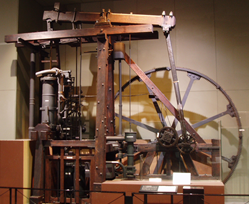
Though this is an early example, many modern examples also exist. It’s not that unusual for the patent owner to lack the will (or the resources) to bring an invention to market, and the threat of patent litigation may discourage the rest of society from doing so even when society would manifestly benefit from the invention. And in an imperfect system where overly-broad claims have issued or properly-issued claims are misconstrued, established companies catering to market demand may be unjustly taxed for their services.
Fortunately, patent terms are limited, thereby limiting most of the inhibitory effects they may have on innovation. But should we tolerate such examples at all? Would society suffer if we got rid of patents entirely?
In an effort to answer this question, I imagined how society would function without patents. There would still be schools, libraries, books, Wikipedia, theses, dissertations, journal papers, conferences, research competitions, recognition, awards, military funding, open source, medicine, altruistic research, not to mention market incentives for new products and services. In my mind, at least, there would be no shortage of new discoveries, idea conception, and knowledge dissemination. Superficially things wouldn’t be that different.
But hold on; there’s a big step from, on one hand, conceiving an idea, and on the other, actually having a commercially-available product or service. In the absence of idea ownership there is no “safe space” for new ideas to be nurtured and developed into full-fledged products. Rather than a garden or a farm, you have a wild meadow or forest. New ideas are like plants competing for resources in a “survival of the fittest” environment, which might sound appealing until you realize that in practice, resources are dominated by the mature, established growth with a vested interest in preserving the status quo. Without a safe space for cultivation, food crops, spices, flowers, and other plants are unable to prove themselves unless the established interests are the primary beneficiaries.
Think about how Dyson was unable to convince any of the vacuum cleaner companies to invest in a bagless vacuum cleaner, because they made so much of their money from the sale of vacuum cleaner bags. But because he had a patent, he was able to justify his own time and effort and to secure investments from others to bring the idea to market. No guarantees, of course, but idea ownership increases the chances of success. Ownership provides an incentive for investment, but it doesn’t require it. And indeed, overlapping interests such as broader patents by others might still deprive the idea of any “safe space” for development.
So on one hand, patents can create a safe space for the patentee to justify further investments and development of the idea, increasing the probability of commercialization. On the other hand, patents reduce the incentives for anybody else to bring the idea to market, at least for the term of the patent, arguably slowing down innovation. Secondary considerations (such as actual vs. desired claim scope, examiner/patent office claim scope errors, feasibility of enforcement, costs of defense, and errors by the court) further complicate the calculation of whether patents provide a net benefit to society.
Though I think it inarguable that inventors, at least, benefit from obtaining patent protection, there’s clearly room for debate as to whether patents benefit society as a whole. Indeed, in the 1850’s many European countries felt that patents benefited patent owners at an inordinate cost to the larger society, and seriously debated about abolishing patents altogether. The Netherlands actually followed through, abolishing patents entirely in 1869. The abolishment was temporary, though, and now the vast majority of countries have patent protection of some form or another. The various patent systems were formalized in response to the widespread criticism in an effort to provide fair, rigorous examination and to make the system reasonably available to all inventors (as opposed to just those having political connections).
The various patent systems have been gradually converging over time, and many countries now share essentially identical standards for patentability and patent term, and often cooperate with respect to the examination process. However, because the main participants in the patent system seem to be the established companies, I’m not convinced that this is a consensus about whether patents are good for incentivizing innovation. But the widespread adoption and convergence of patent protection does seem to be at least a consensus that patents have, on the whole, been good for the economies of industrialized nations, most likely via the efforts of established companies. But strong economies are good for taxes, and that, my friend, is why I believe the government grants monopolies, but also limits those monopolies so as not to overly suppress innovation.

Leave a Reply